
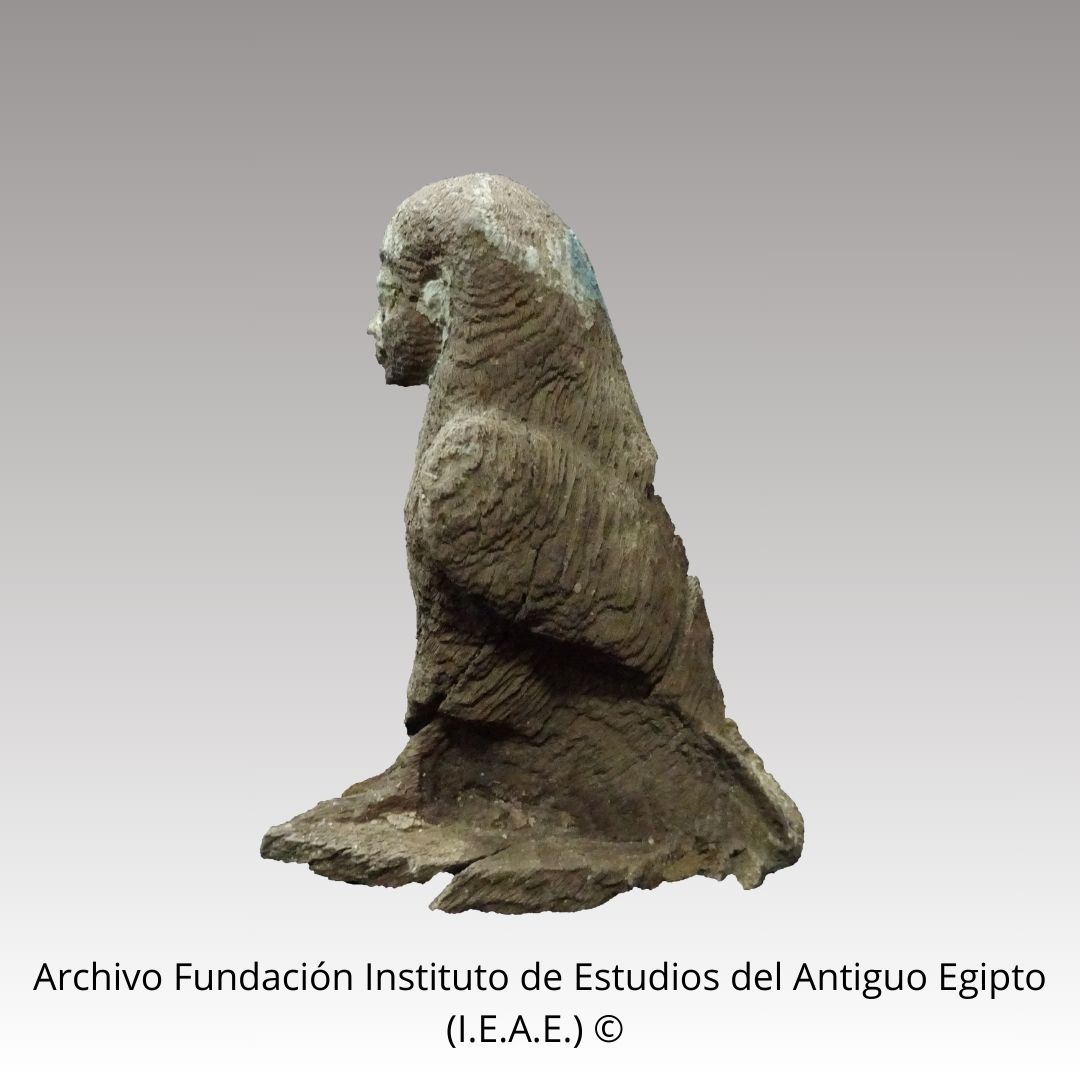
Ba
332 a.C- 394 d.C./ 332 b.C. – 394 a.C.
Egipto/ Egypt.
El pájaro ‘Ba’ representaba el poder del halcón asimilado al dios Horus. Otorgaba poderío vital al hombre.
Los antiguos egipcios creían que había ocho formas espirituales que componían el «alma» del difunto y pasaban a la siguiente vida. El Ba, generalmente representado, como una cabeza humana con el cuerpo y las alas extendidas de un halcón (a menudo con manos humanas a los costados), era la encarnación de la personalidad del difunto. Los egipcios creían que los pájaros podían volar entre el mundo de los vivos y el mundo del más allá. De día, el Ba volaba y se unía con las otras formas espirituales importantes del difunto en el más allá, y luego regresaba a la tumba para estar con la momia por la noche. / The bird ‘Ba’ represented the power of the falcon assimilated to the god Horus. It gave vital power to man. Ancient Egyptians believed that there were eight spirit forms that comprised the ‘soul’ of the deceased, and moved on to the next life. The Ba, usually depicted as a human head with the body and outstretched wings of a falcon (often with human hands down the sides), was the embodiment personality of the deceased.The Egyptians thought birds were able to fly between the world of the living and the world of the afterlife. The Ba would fly by day and unite with the other important spirit forms of the deceased in the afterlife, and then return to the tomb to be with the mummy at night.
Detalles de la pieza / Artwork Details:
Talla de madera.
Imagen de Ba sedente, representado con cuerpo de halcón y cabeza humana con peluca egipcia. / Image of Ba seated, represented with the body of a falcon and a human head with an Egyptian wig.
Ficha Técnica / Overview:
Campaña / Season: 2014.
Título / Title: Ba.
Periodo:/ Period: Periodo Ptolemaico 332 a.C.-Periodo Romano 395 d.C / Ptolemaic period 332 b.C.- Roman Period 395 a.C..
Cronología / Chronology: Dinastía Macedónica 332 a.C.- 394 d.C. Macedonian Dynasty 332 b.C.- 395 a.C.
Procedencia / Origin: Tumba del Visir Amen-Hotep Huy AT-28-. Patio, zona norte. Asasif. Luxor West Bank.
Actualidad / Present : Luxor Museum.
Materia/ Materials talla de madera / carved wood.
Dimensiones: 7,9 cm. x 9,8 cm. x 3,6 cm.
NºRegistro: 9631-14.
Bibliografía / Bibliography:
- Bedman, T. y Martín Valentín, F. J.: Los tesoros del Visir Amen-Hotep Huy. Misión Arqueológica Española Proyecto Visir Amen-Hotep Huy. El Cairo, 2021 págs. 25-46.
- Martín Valentín, F. J.: Los Magos del Antiguo Egipto. Madrid, 2002, pág. 108.
- Martín Valentín, F. J.:Azules Egipcios. Pequeños tesoros del Arte: Los dioses y las cosmogonías. Barcelona, 2005, págs. 23-27.
- Martín Valentín, F. y Bedman, T (Ed.): Proyecto Visir Amen-Hotep Huy (Tumba AT-28-).Memoria preliminar 2009-2016. Misión Arqueológica española en Asasif (Luxor-Occidental). Málaga, 2017.
- Shaw, I.: Historia del Antiguo Egipto. Madrid, 2007, págs. 626-627.
ELABORADO POR: Teresa Bedman, Mario Calvo, María Galvín, y Florencia Nicolari.
