
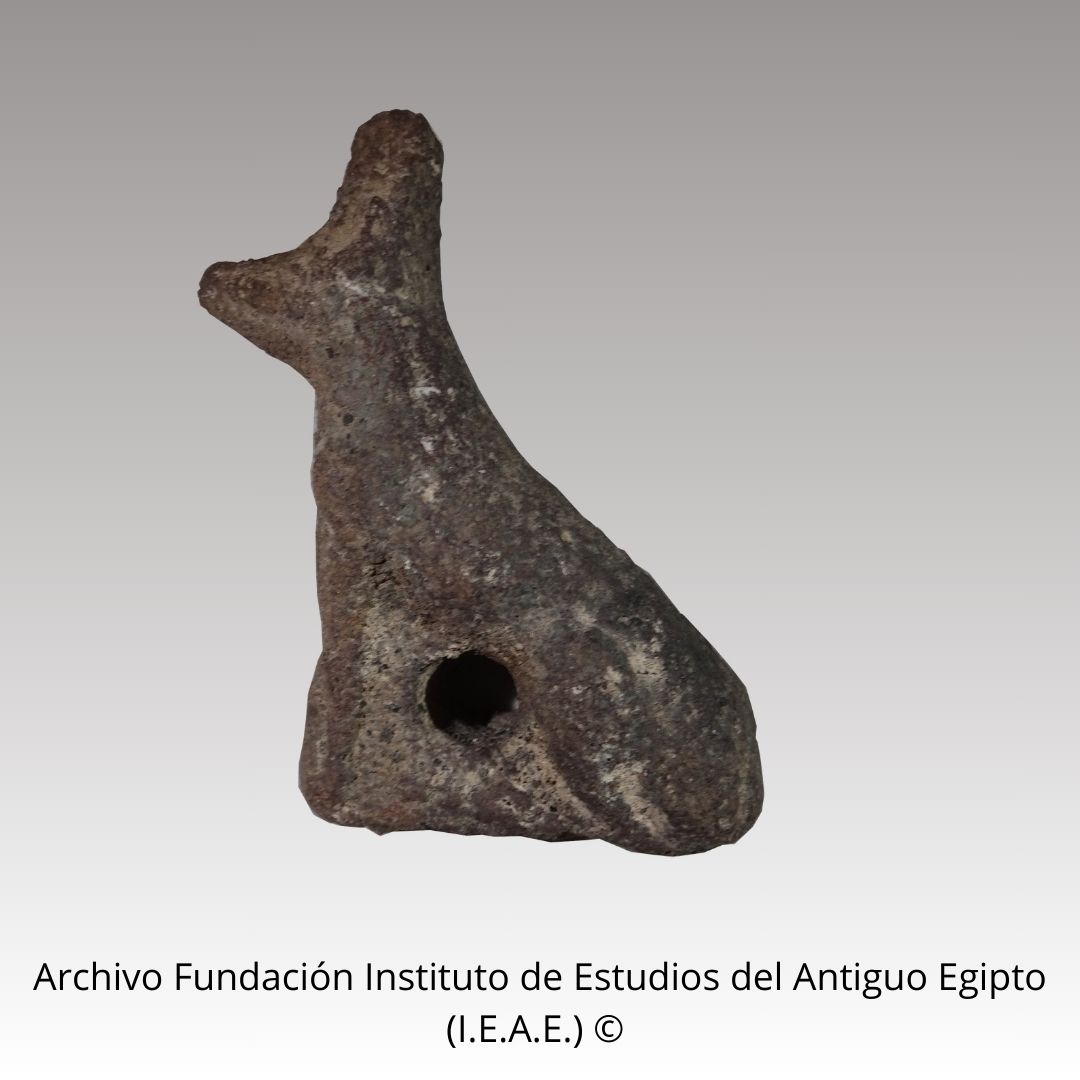
Amuleto de Anubis – Anubis Amulet
332 a.C.-395 d.C / 332 b.C.-395 a.C
Egipto/ Egypt.
El dios Anubis era considerado el protector de las necrópolis, es habitual encontrar su iconografía en amuletos y demás piezas que forman un ajuar funerario egipcio / The god Anubis was considered the protector of the necropolis; it is common to find his iconography on amulets and other funerary Egyptian pieces.
Detalles de la pieza / Artwork Details
Este amuleto perforado a modo de cuenta, tiene forma del dios Anubis (en su forma animal) sentado. Estos amuletos eran empleados para proteger el enterramiento de una momia / This pierced amulet as a bead is in the shape of the sitting god Anubis (in his animal form). These amulets were used to protect the burial of a mummy.
Ficha Técnica / Overview:
Campaña / Season: 2014.
Título / Title: Amuleto de Anubis / Anubis charm
Periodo: Greco-romano /
Cronología / Chonology: Ptolemaico 332 a.C. Romano—395 d.C/ Ptolemaic 332 b.C. Roman—395 b.C
Procedencia / Origin: Lúxor. Tumba del Visir Amen-Hotep Huy AT-28-. Asasif. Luxor West Bank.
Actualidad: Luxor Museum.
Materia / Materials: Cerámica marrón-rojiza / Ceramic reddish-brown.
Dimensiones: 2,9 cm. x 5,2 cm. x 1,5 cm.
Nº Registro: 9534-14.
Bibliografía / Bibliography:
- Andrews, C.: Amulets of Ancient Egypt. British Museum, 1994.
- Bedman, T. y Martín Valentín, F. J.: Los tesoros del Visir Amen-Hotep Huy. Misión Arqueológica Española Proyecto Visir Amen-Hotep Huy. El Cairo, 2021, págs. 20-21, 46.
- Martín Valentín, F. y Bedman, T (Ed.): Proyecto Visir Amen-Hotep Huy (Tumba AT-28-).Memoria preliminar 2009-2016. Misión Arqueológica española en Asasif (Luxor-Occidental). Málaga, 2017.
- Shaw, I.: Historia del Antiguo Egipto. Madrid, 2007, págs. 626-627.
ELABORADO POR: Teresa Bedman, Mario Calvo, María Galvín, y Florencia Nicolari.
