
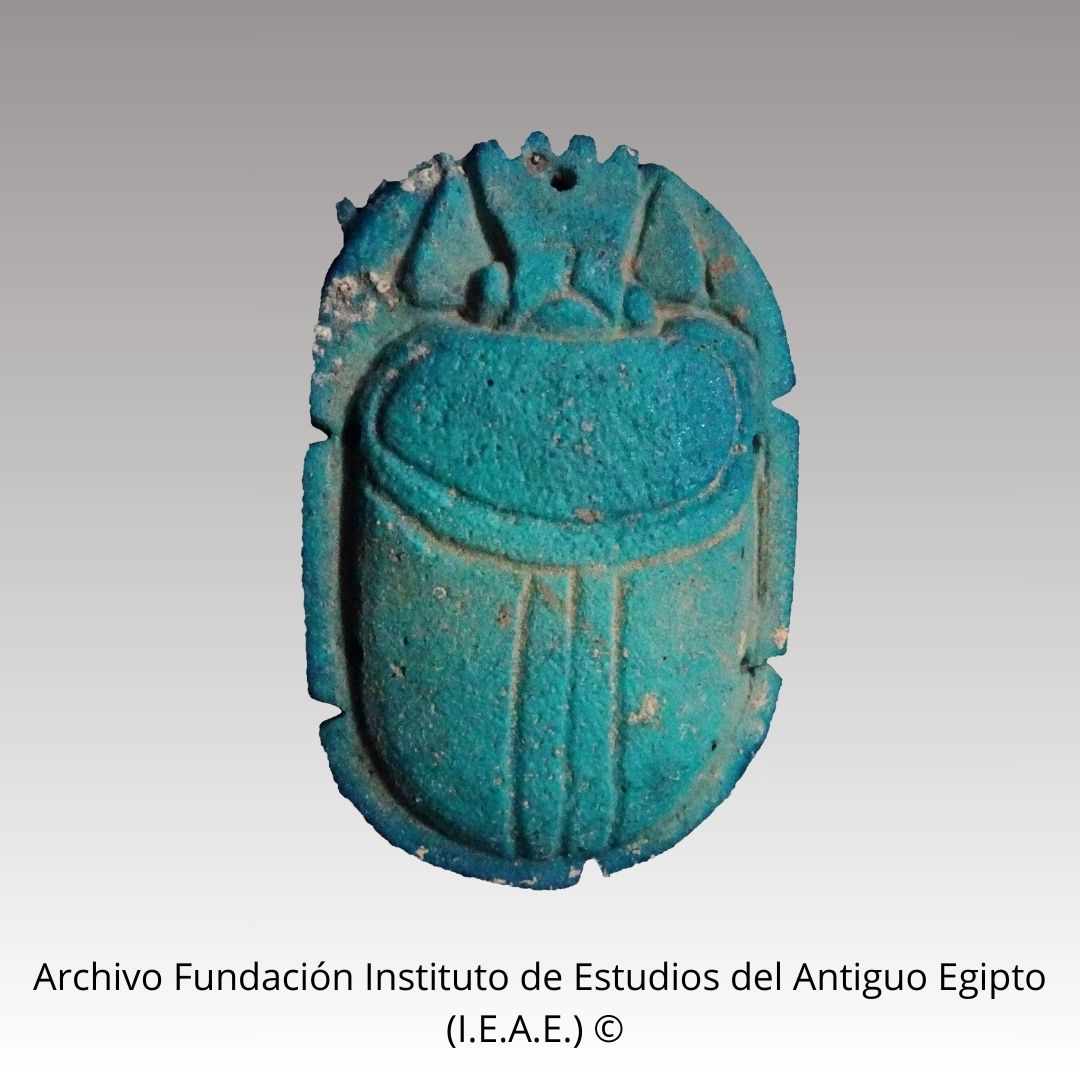
Escarabeo – Scarabs
1069-664 a.C. / 1069-664 b.C.
Egipto / Egypt
El escarabeo es un amuleto en forma de escarabajo, que establece un paralelismo entre la resurreción y la salida del sol.
Empleado tanto en vida como en muerte, encontrando en la primera protección contra los males y en la segunda la garantía del paso al Más Allá. / The scarab is an amulet in the shape of a scarab, which establishes a parallel between the resurrection and the sunrise. Used both in life and in death, finding in the first protection against evils and in the second the guarantee of passage to the Hereafter.
Detalles de la pieza / Artwork Details:
Escarabeo de fayenza. / Faience scarab.
Ficha Técnica / Overview:
Campaña / Season: 2015.
Título / Title: Escarabeo / Scarabs
Periodo / Period: Tercer Periodo Intermedio 1069-664 a.C. / Third Intermediate Period 1069-664 b.C.
Cronología / Chronology: XXI Dinastía1069- 656 a.C. / XXI Dynasty 1069-656 a.C.
Procedencia / Tumba del Visir Amen-Hotep Huy AT-28-, en patio zona norte.Asasif. Luxor West Bank.
Actualidad / Present : Luxor Museum.
Materia/ Materials Fayenza. / Faience.
Dimensiones / Dimensions: 3,9 cm. x 6,2 cm. x 0,8 cm.
Nº Registro: 9921-15.
Bibliografía / Bibliography:
- Andrews, C.: Amulets of Ancient Egypt. British Museum, 1994.
- Bedman, T. y Martín Valentín, F. J.: Los tesoros del Visir Amen-Hotep Huy. Misión Arqueológica Española Proyecto Visir Amen-Hotep Huy. El Cairo, 2021, págs. 25-46.
- Martín Valentín, F. J.: Los Magos del Antiguo Egipto, Madrid, 2002, pág. 112.
- Martín Valentín, F.J.: Azules Egipcios. Pequeños tesoros del Arte: Los dioses y las cosmogonías. Barcelona, 2005, págs. 23-27.
- Shaw, I. :Historia del Antiguo Egipto. Madrid, 2007 págs. 626-627.
ELABORADO POR: Teresa Bedman, Mario Calvo, María Galvín, y Florencia Nicolari.
